Covering the suburbs of Balaclava, Elwood, Ripponlea and St Kilda, Brighton Road is the main road between St Kilda and Brighton.
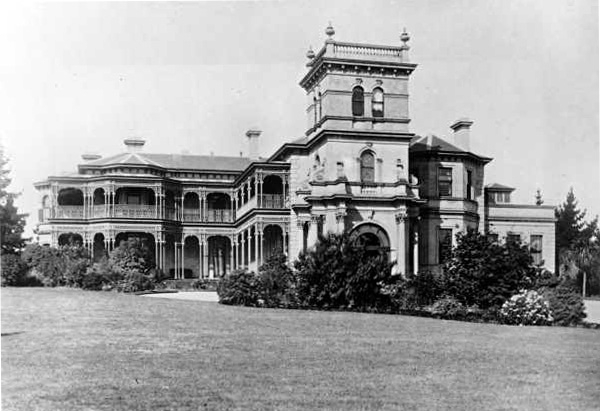
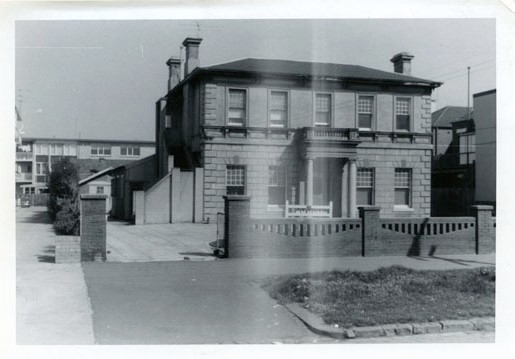
A large Italianate house with 11 rooms and a ballroom / billiard room built in 1890 on a large lot complete with bowling green, and probably designed by JAB Koch. Originally called Farncombe, it was built for solicitor William Johnson, who had to sell up in 1894. Renamed Broad Hinton by 1895, it was purchased in 1899 by solicitor Peter Wilson, and his family occupied the house until the late 1950s. The former large garden area has since been subdivided for three houses and a block of flats.
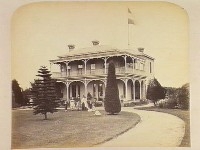
Italianate style with an elegant balcony, built in 1868. The property’s site was subdivided in the 1920s with the formation of Wimbledon Avenue, and the house itself was demolished in the early 1970s. There is now a block of apartments in its place.
Henry Figsby Young (1813-1900), was the licensee of the Elsternwick Hotel from the 1850s becoming its owner in 1870.
The 1877 St Kilda Rate book identifies a six-room brick house next to the hotel, occupied by Henry F Young (Senior).
Correspondence between him and the St Kilda Council identify it as being called Elsternwick Cottage.
In 1883 Henry Young senior, by then a widower, remarried and moved away.
Probate for his will in 1900 makes no mention of this property in his estate. By the 1890's the house is identified as being owned by his son, also named Henry Figsby Young (1845-1925) with the house having grown to twelve rooms.
In 1917 the Estate was subdivided with that portion of it, now Heaton Avenue, being sold off in 49 allotments.
Henry Young Junior is famously the co-founder of the Young and Jackson Hotel. He married Joanna Fraser and had two sons and a daughter. His second wife, Jessie Allison Mead and Henry both died in 1925, when his estate was worth 121,000 pounds. His beneficiaries were his children and grandchildren whilst his widowed daughter Rosalie Bickford was made life tenant of Normanhurst.
In 1929 when the estate was finally wound up, it took Leonard Joel and Gardiner and Lang six days to auction the 1300 items of furniture, and decorative items.
Young's painting collection was sold separately and was considered the finest in private hands at the time.
In 1930 the house was offered for sale but remained unsold being the onset of the great Depression. For several years Normanhurst was used as a guest house.
In 1938 it was finally sold for £10,000 to W E Fraser now the owner and licensee of the neighbouring Elsternwick Hotel.
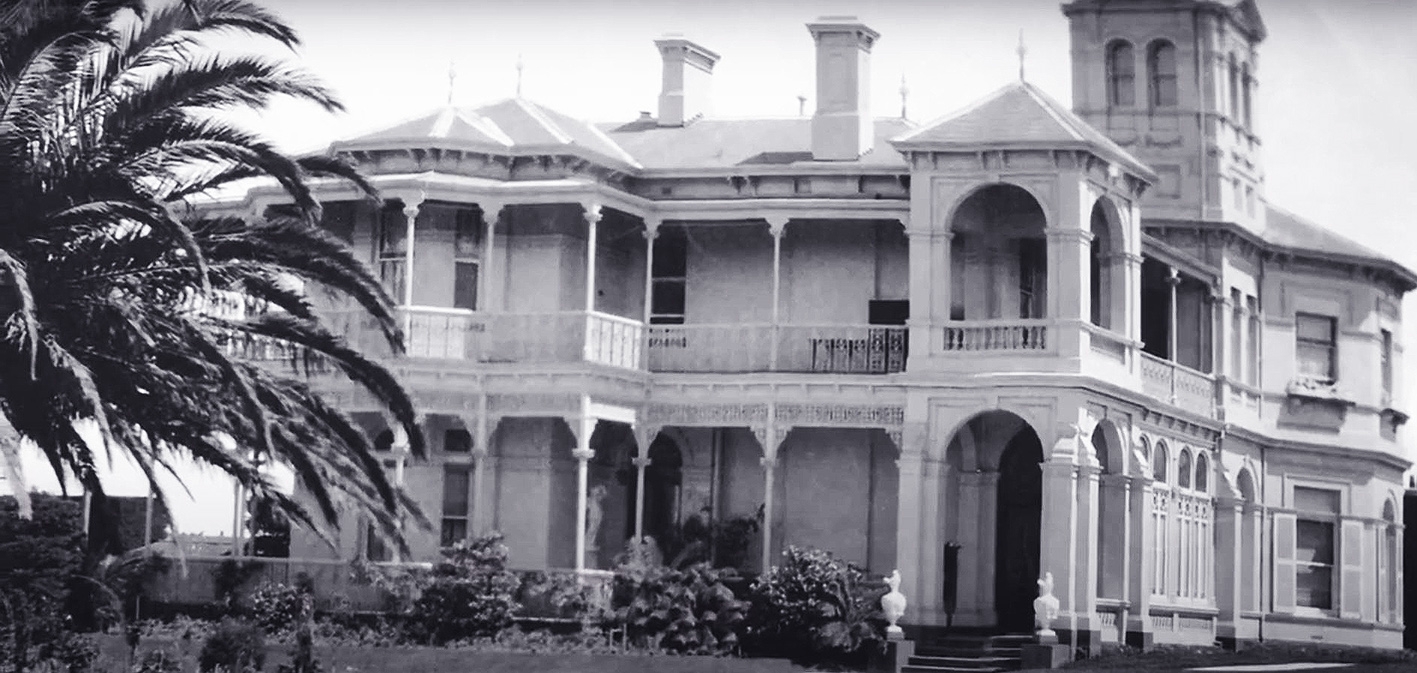
In January 1939 part of the property was destroyed by fire. By May 9th the house (described as having 30 rooms) was demolished using a power jack, a cable and motor truck, taking two and half hours to bring down the landmark tower.
The removal of the cast iron verandah posts in April resulted in a spectacular industrial accident when a workman was injured with 25 tons of concrete, steel and iron verandah falling on him.Brick-veneer flats and a drive-through bottle shop now stand where Normanhurst once stood.
-Research by Liz Kelly.